
The Circular Economies Innovation Communities (CEIC) programme was a first for Wales, bringing together organisations from all sectors to create collaborative innovation networks for a more sustainable future.
Since its inception, the project has supported more than 385 participants from 256 public, third and private sector organisations across South Wales to embed sustainability into their operations. Together they have enhanced their knowledge of the circular economy, developed their skills, and explored the potential for circular economy principles across a range of areas, including social housing, education and healthcare.
After three independent evaluations – and the expansion of the initial programme to include private sector organisations – it’s clear that the programme is a success. As the authors of the latest evaluation state, “The programme stands as an exemplary model for SME-focused engagement that effectively enables businesses to implement meaningful circular economy and carbon reduction initiatives.”
Here are the valuable lessons about communities of practice and circularity that the programme’s three iterations have yielded so far.
1. People are genuinely keen to learn about the circular economy
Many participants begin the programme with a limited understanding of the circular economy or the ways they could advance their organisation’s involvement within it, but they are nonetheless eager to learn. Programme take-up reflects this, with the number of organisations involved in the programme greatly surpassing our target figures.
This appetite for learning and collaboration is extremely encouraging, especially as Wales’ legislative landscape grows and evolves with the likes of the Wellbeing of Future Generations Act, the Single-Use Plastic Products Bill and the Net Zero Wales plan. The programme provides participants with the opportunity to deepen their knowledge of these initiatives alongside practical circular economy thinking, equipping them with valuable insight and skills to make a real difference within their organisations and beyond.
“It was a big relief to network with other people from within the local authority and wider authorities and know that I wasn’t alone in driving change”.
Swansea Bay programme participant
2. Empowering people with knowledge catalyses action
Participants leave the programme with a thorough understanding of the circular economy, and also the capacity and capability to apply their newfound knowledge within their organisations. Participants have reported numerous workplace wins following their upskilling, such as reduced food waste and increased staff engagement in sustainability training.
These impacts collectively demonstrate the programme’s success in promoting circular economy principles, and also show how important it is for organisations to support their employees as enthusiastic advocates for change, especially when faced with the often-daunting task of organisational transformation.
"I met with the health board sustainability lead who was really excited about CEIC, and asked if I could present to other departments in my hospital, including the sustainability steering group that presents to an exec board. The sustainability steering group shares ideas around implementing sustainability in the organisation and driving forward action”.
Swansea Bay programme participant

3. There are opportunities to embed circularity everywhere
One of the key questions participants come to the programme with is how to implement circular economy principles in spaces where there are no obvious opportunities to do so. Through the programme, participants learn how to engage in different aspects of circularity and how to tailor these practices to suit their specific organisational needs. Empowering participants to be active contributors in this way has led to a diverse range of cleverly-considered projects, from establishing circular waste streams for coffee grounds and digitising paper-based systems, to redistributing surplus energy and optimising transportation logistics.
"Going through the CEIC programme helped reveal a definition of what Circular Economy means in the context of my organisation, and the ways to make suggestions for change”.
CEIC Summer Conference participant
4. Consistent engagement keeps circularity front and centre
Organisations are aware that sustainability is no longer a ‘nice to have’, and that making meaningful progress in this area requires a complete shift in strategy, but it can be hard to keep momentum going when faced with other operational challenges. This is often mirrored during the programme, with work commitments, job transitions and external factors impacting participants’ ability to keep focus.
Despite these challenges, the efforts of programme coordinators mean that participants always remain highly involved, with an extremely high programme completion rate. This highlights how consistent engagement is important in keeping everyone working steadily towards their shared circular economy objectives – and in responding flexibly should those objectives change, as they often do.
5. Collaboration is key
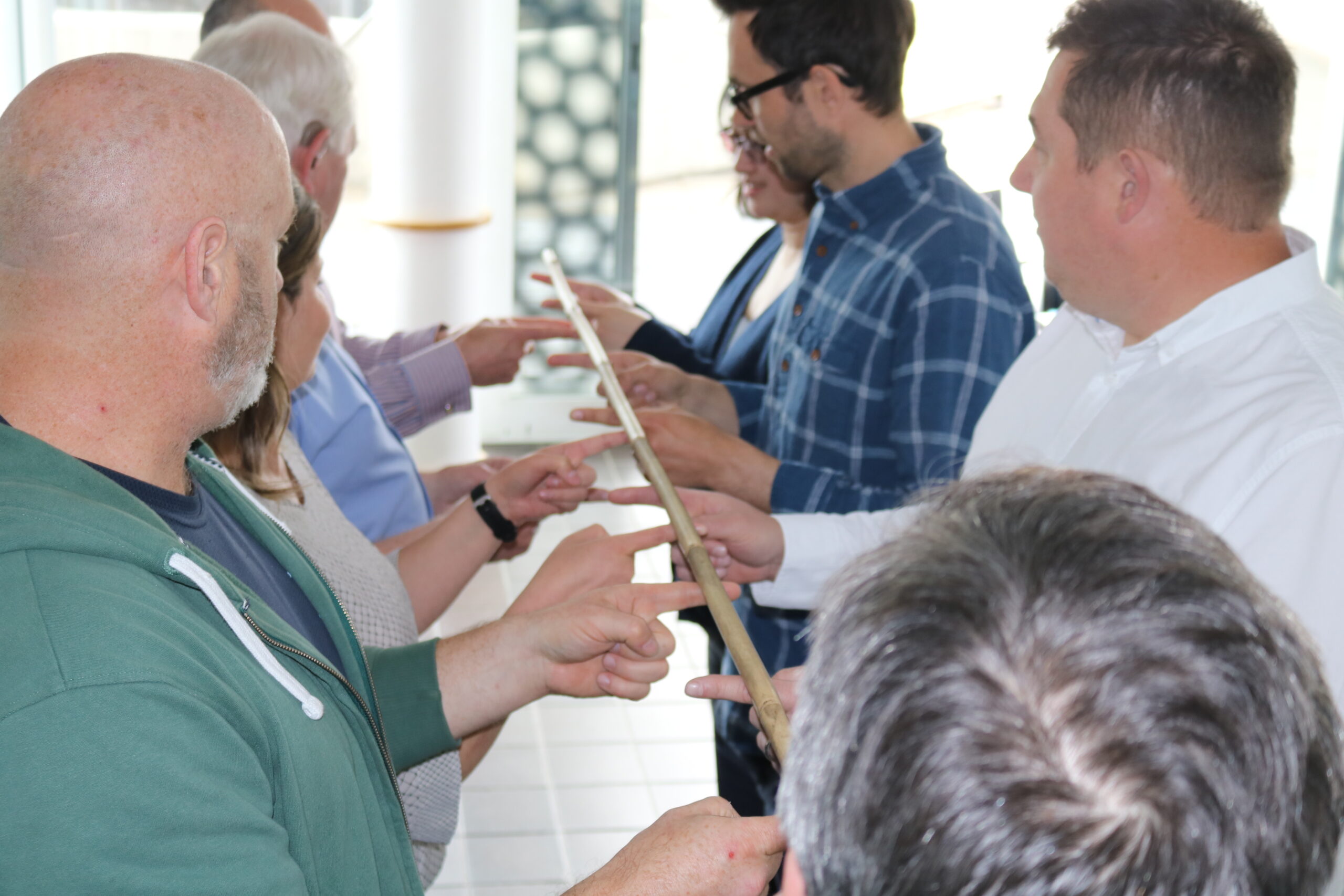
The CEIC programme is designed with collaboration at its core, because we know the only way Wales can transition to a sustainable and circular nation is when sectors from all industries work together to address common challenges, pool resources to drive innovation, and share learnings to fill knowledge gaps.
Collaboration is instrumental to the success of our participant’s projects and their continued achievements after leaving the programme. By engaging with others beyond their own organisational boundaries, participants are able to access a broader range of perspectives and leverage the power of diversity of thought in generating innovative solutions. Many participants have also shared how partnerships sought out during the programme have led to additional opportunities across the region to expand further on their projects.
“Collaboration is the gift of CEIC. The programme develops circular economy leaders that take back solutions to their organisations as change agents”.
Cardiff Capital programme participant
6. CEIC is driving transformative change throughout Wales
Feedback from programme participants is consistently overwhelmingly positive. Research following the latest iteration of the programme found 81% of participants said they had enhanced their circular economy knowledge, 85% had improved their innovation skills, and 73% said they have a better understanding of Scope 1, 2 and 3 carbon emissions. Overall, 80% of participants recommend the programme.
Importantly, participants are applying their programme learning and knowledge to real-world applications, with tangible results including Green Growth Pledge certifications, carbon reduction plan implementations, and operational changes that measurably reduced participating organisations’ carbon footprints. According to the programme’s latest evaluation, the majority of participants intend to apply for funding to support their innovation initiatives, and 80% say they intend to continue collaboration with CEIC on their projects.
It’s clear, then, that CEIC is addressing a real demand within Wales. By supporting organisations across all sectors to realise the many benefits of circular economy thinking, CEIC is enabling the collaboration and innovation needed to create a more sustainable and equitable nation for everyone.
Congratulations to all participants in CEIC programme so far – your efforts have made an important contribution to the future of Wales and beyond.